
St Yves

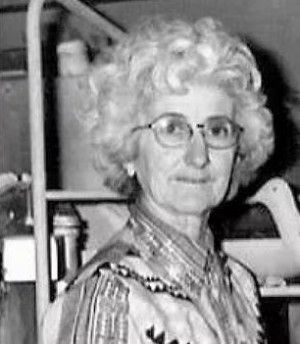
Jeanne Lévêque was born on July 23, 1914, in La Guerche-de-Bretagne, into a family with a deep appreciation for the arts. Her father, a painter and decorator, and her mother, who ran a home décor store, introduced her at an early age to a world where art and craftsmanship played a central role.
She quickly showed a keen interest in drawing. She enrolled at the École des Beaux-Arts in Rennes, where she furthered her training and refined her artistic sensibility.
She set up her first studio in Guerche-de-Bretagne in 1948. Her specialty: characters, market scenes, Breton saints, virgins, nativity scenes... She was known as “the Santonnière of Brittany.” In 1965, she opened a second studio in Locmariaquer.
In the 1950s, encouraged by Mathurin Méheut, whom her father had known during his own studies at the École des Beaux-Arts in Rennes, Jeanne Lévêque found decisive support in her career. Méheut became a mentor and loyal friend, accompanying and advising her for several years.
In 1955, the artist took part in her first international ceramics festival in Cannes. In the 1960s, her meeting with urban planner Guy Houist led her towards architectural works, glazed stoneware frescoes, which can still be seen in Maurepas and Bourg-l'Évêque, in Rennes. In 1978, Jeanne Levêque was awarded the gold medal at a craft exhibition in Munich, Germany.